
The Story Behind the Label: Iconic Champagne Houses and Their Secrets
9th March 2026
Behind the elegant labels of the world’s top Champagne Houses, discover secrets, stories and bold leaders. Many were standout women called the ‘Widows of Champagne’.
Here are stories from some well-known Champagne houses:
Ruinart
Nicolas Ruinart launched it in 1729. It holds the title of the first Champagne house. His uncle, monk Dom Thierry Ruinart, predicted sparkling wine’s wide appeal. The brand excels in Blanc de Blancs from Chardonnay grapes alone. Its cellars dig into old limestone quarries (crayères), a UNESCO World Heritage site.
Veuve Clicquot
Veuve Clicquot means ‘Clicquot Widow’. Barbe-Nicole Ponsardin lost her husband at age 27. She quietly ran his business in the early 1800s. She invented the pupitre riddling table around 1816 for Veuve Clicquot, allowing sediment to collect in the bottleneck for clear, sparkling Champagne. Her signature Yellow Label has marked the house’s distinct dry style since 1876.
Moët & Chandon
Founded in 1743 by Claude Moët, this house quickly became synonymous with luxury and celebration. Claude’s grandson, Jean-Rémy Moët, built a strong relationship with Napoleon Bonaparte, who was known to be a big fan and visited the cellars in 1807. The Moët Impérial label is a tribute to this relationship. Today, Moët & Chandon is the largest producer of Champagne and part of the luxury LVMH group.
Dom Pérignon
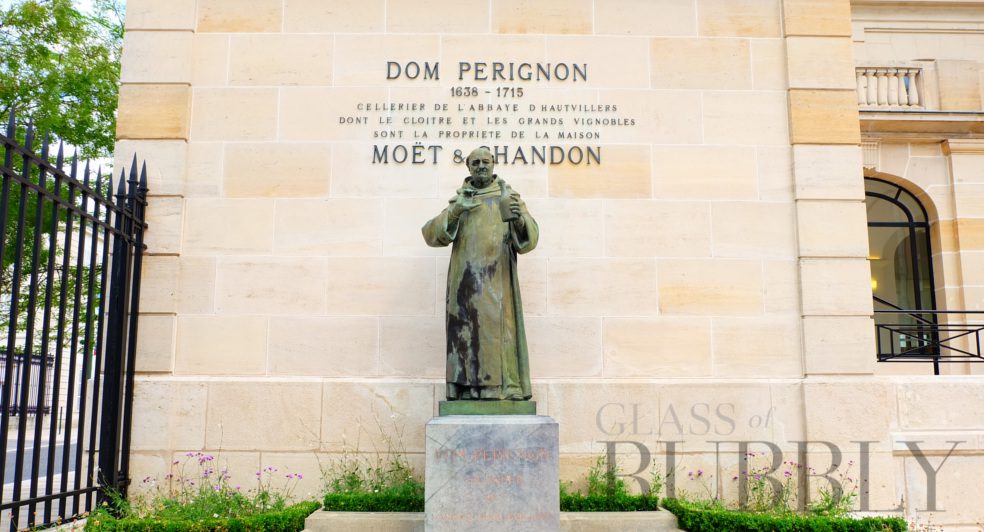
The 17th-century monk Dom Pierre Pérignon was a pioneer in refining winemaking techniques, including blending grapes from different vineyards to improve quality and pioneering stronger bottles and better corks. The prestige cuvée bearing his name is produced only in exceptional vintage years, a commitment to bearing witness to the unique character of a single harvest.
Bollinger
A family-owned house since 1829, Bollinger is known for its full-bodied, Pinot Noir-driven style. The house’s history is marked by the formidable Lily Bollinger, who took the reins in 1941 after her husband’s death and expanded its global reputation. Her famous quote on when to drink Champagne perfectly captures its universal appeal: “I drink it when I’m happy and when I’m sad. Sometimes I drink it when I’m alone. When I have company, it’s a must… I don’t drink it at any other time, unless I’m thirsty”. It is also famously associated with the fictional spy James Bond.
Krug
Joseph Krug founded his house in 1843 with the radical ambition to create the most complete expression of Champagne every year, regardless of the harvest conditions. To achieve this, Krug uses a vast library of reserve wines, some aged up to 15 years, and vinifies each parcel separately in small oak barrels to ensure consistency and remarkable depth in every bottle of Grande Cuvée.
Glass of Bubbly Content
Content shared by this account is either news shared free by third parties or advertising content from third parties and affiliations. Please be advised that links to third party websites are not endorsed by Glass of Bubbly Ltd - Please do your own research before committing to any third party business promoted on our website.