
The Vulture Wine Region Sparking Wines
23rd September 2025
The Vulture wine area is named after Mount Vulture, an inactive dormant volcano located 56 km (35 mi) north of the city of Potenza in the Basilicata region (Italy). Last significant eruptive/volcanic activities took place hundreds of thousands of years ago, and some lighter ones around 40,000 years ago.
This area is home to the prestigious Aglianico del Vulture DOC and Aglianico Superiore DOCG appellations which express a volcanic soil area with intense still red wines. This viticultural area is the most significant in Basilicata region.
Aglianico grape variety is one of the great red grape varieties of southern Italy, often called the “Barolo of the South” because of the power, depth, and aging potential of its wines. It is mostly cultivated in Campania and Basilicata regions but it can also be found in the regions of Puglia, Molise and Sardinia. Aglianico origins are not certain. Many analysts agree that Aglianico was first cultivated in Phoenicia, then Greece. Vines were transported to southern Italy in the seventh and sixth centuries BC by Greek traders. The debate continues regarding the origins of its name and for this there is no definite answer. According to Jancis Robinson, the “earliest written mention of the name Aglianico appeared in 1520. An archive document testifies that Giulio Antonio Acquaviva d’Aragona, Count of Conversano owned fields planted with grapevines called Aglianich (plural of Aglianico).”
Some researchers speculate that Aglianico was the grape used for the famous (and most expensive) wine of the time, Falerno. Pliny the Elder, Roman author and naturalist wrote that Aglianico was “among the greatest in antiquity” and Dennis Dubourdieu, a professor of oenology at the University of Bordeaux and a winemaker, considers the variety “the grape with the longest consumer history of all.”
The Aglianico grape ripens late (often into November), one of the latest in Italy, and carries quite high natural acidity, a key trait for quality sparkling wine. It is characterised by thick skins which result in high tannins, deep color, long aging capacity. It thrives in volcanic soils and at high altitudes, which help balance its natural richness with acidity and freshness. These characteristics have long inspired experimentation with spumante (sparkling wine) in the Vulture.
The soils of the Vulture wine area are obviously predominantly volcanic and are rich in minerals and include elements like clay, calcium, and tuff, creating poor, well-drained conditions that are ideal for the late-ripening Aglianico grapes. While some areas feature calcareous clay, the defining characteristic across the region is its mineral-rich volcanic origin.
The Vulture region is historically centred on Aglianico but there are also important white varieties (Falanghina, Moscato Bianco, Malvasia Bianca di Basilicata and some Greco) and a few minor local ones like the red variety Tamurro.
According to some unofficial records, in the past Aglianico was not vinified as a still red wine, but it was vinified with an ancestral method because the first fermentation was interrupted, the wine bottled and the second fermentation happened spontaneously in the bottle.
In recent decades a parallel tradition of Metodo Classico and tank method sparkling wines has been developing.
Starting around the 1970s–80s, local winemakers began testing Metodo Classico (traditional method) styles, sometimes blending Aglianico vinified in white (blanc de noirs) with Chardonnay or Pinot Nero.
By the 1990s–2000s, as Italian sparkling wine demand grew beyond Franciacorta and Trento, producers in Basilicata embraced sparkling production to showcase volcanic terroir in a fresher style.
More recently, several producers have started crafting traditional and tank mehod (Charmat method) sparkling wines, using both Aglianico and some white varieties. The sparkling (spumante) version made from 100% Aglianico grapes with the traditional method has a specific official appellation, Aglianico del Vulture Spumante DOC, recognised since 1971. This spumante must be red and made with the classic method from 100% Aglianico del Vulture, and a minimum of 9-month period of lees ageing. It is a rare and niche appellation, showcasing the versatility of Aglianico beyond its famous still red wines.
The sparkling wines from the Vulture represent a growing niche. They are often produced in small quantities, with a focus on quality rather than volume. They offer a southern Italian alternative to Franciacorta or Trentodoc, more mineral, more savoury, often with a slightly more rustic soul due to Aglianico’s character.
Sparkling wine tradition in Vulture is relatively young but firmly rooted in the natural acidity of Aglianico and the volcanic terroir, and sparkling wine production can be considered an exciting new chapter. Today, Metodo Classico Aglianico sparklings are seen as serious, long-aging wines. Thanks to the natural acidity of Aglianico and the volcanic terroir, these wines are sharp, mineral, and characterful. There is growing appreciation for volcanic terroir sparkling wine from Aglianico. While Charmat Falanghina versions offer fresher, approachable options.
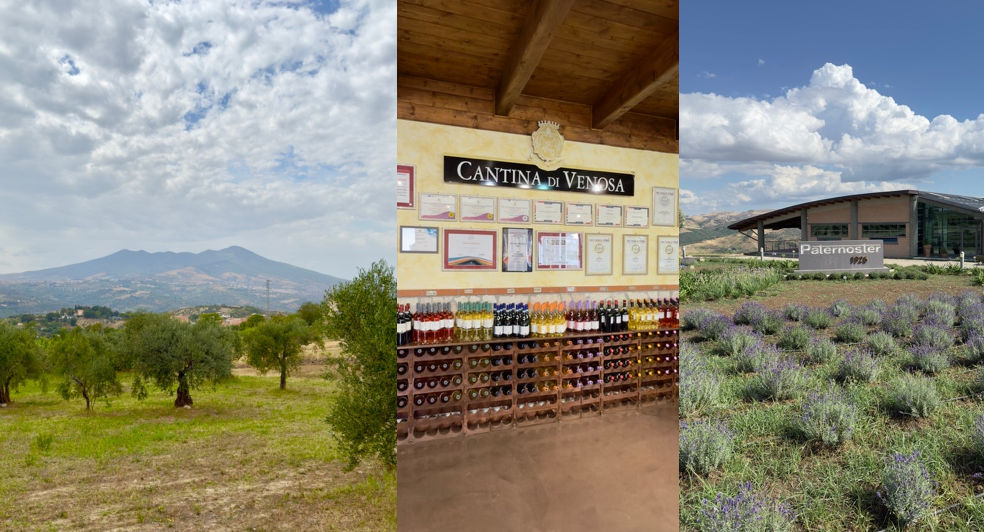
During my recent trip to the Vulture region, I visited a few wineries and tasted also some of their sparkling wines produced both with classic method and tank method (Charmat) and I was impressed by their quality level.
Cantine del Notaio winery
Cantine del Notaio is a renowned winery in Rionero in Vulture, founded in 1998 by Gerardo Giuratrabocchetti with the vision of showcasing the full potential of the Aglianico del Vulture grape.
The name pays homage to his father, a notary (“notaio”). The estate combines ancient underground cellars, carved into volcanic tuff rock, with innovative winemaking techniques.
The winery is best known for its expressive range of Aglianico-based wines, from structured reds to Classic Method sparkling, highlighting the unique volcanic soils of Monte Vulture. Cantine del Notaio has become a reference point in southern Italian wine, marrying tradition, terroir, and modern craftsmanship.
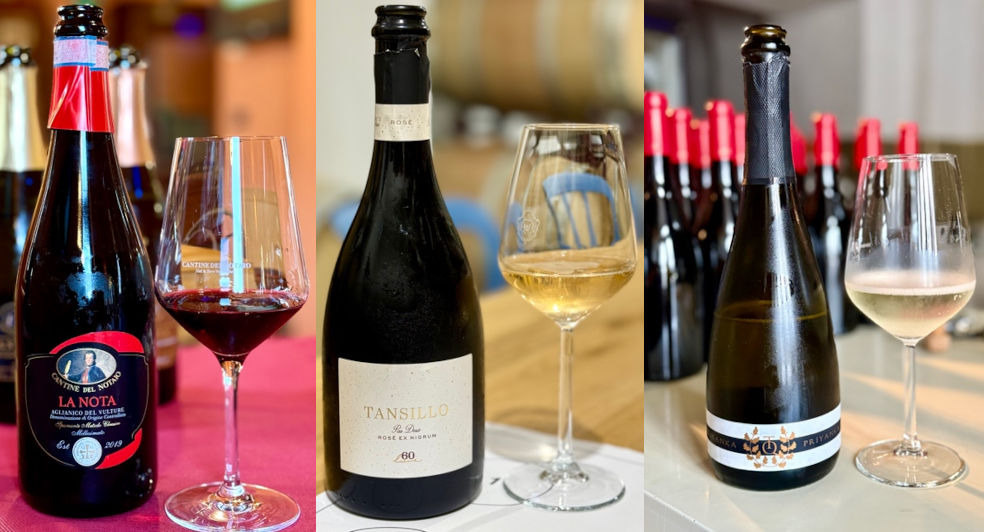
1. La Stipula 2021, Quality Sparkling White Wine – Zéro Dosage Classic Method Millesimato, 100% Aglianico – Disgorgement: 2025.
On the nose, notes of white flowers, crisp apple, plum, subtle citrus; evolving to yeast, bread crust, toasted hazelnut, and a hint of vanilla. On the palate, it’s fresh, dry, and structured; lively acidity balanced by sapidity; complex and elegant with a long finish. Mineral-driven due to the volcanic soils.
2. La Stipula 2016, Quality Sparkling Rosé Wine – Zéro Dosage Classic Method Millesimato, 100% Aglianico – Disgorgement: 2024.
Aromas of delicate spring flowers, almond blossom, pink grapefruit, ripe lemon, hints of red fruit and a smoky nuance. On the palate, perceptible tannin structure and power of Aglianico (unusual for a sparkling rosé) balanced by precise flavours of wild strawberry, raspberry and redcurrant. Additional hints of rose petal. Bone-dry savoury finish with lingering fruit.
3. La Nota 2019, DOC Sparkling Red Wine – Zéro Dosage Classic Method Millesimato, 100% Aglianico – Disgorgement: 2024.
Intense ruby-red colour with a fine perlage. Aromas of concentrated black cherry, blackberry, plum with a red-berry lift (raspberry/strawberry) and violets, clear saline/mineral vein. On the palate, it is crisp and clean with a good structure and a quite firm tannic grip. The tannins are well balanced by a good acidity, the fruit component and the bubbles. Slightly bitter, savoury and almondy finish. It is a a versatile classic method for aperitivo to full meal. It would pair perfectly with cured meats, legume soups and hearty stews.
Cantina di Venosa winery
Cantina di Venosa is one of the most historic and respected cooperative wineries in Basilicata, founded in 1957 by 27 promoting members in the town of Venosa. Bringing together 400 local growers who cultivate vineyards on the volcanic slopes of Monte Vulture, the cooperative is dedicated above all to the production of Aglianico del Vulture DOC, the region’s most emblematic still red wine.
The winery manages more than 800 hectares of vineyards, making it one of the largest and most influential producers in southern Italy. Despite its size, Cantina di Venosa has earned a reputation for maintaining strong ties with tradition and terroir, showcasing the depth, power, and elegance that Aglianico can achieve in volcanic soils.
Cantina di Venosa offers a wide range of wines, from fresh, approachable expressions to complex, age-worthy bottlings, serving as both an ambassador of Basilicata’s heritage and a modern driver of quality for the region.
1. Tansillo Rosè Ex Nigrum 36 Lune 2021, Quality Sparkling Wine – Pas Dosè Classic Method Millesimato, 100% Aglianico – Disgorgement: 2024.
Pale pink colour with cipria (face makeup colour) reflexes. Very fine and persistent perlage. Initial aromas of small red berries, hints of strawberry, raspberry and subtle wild berry nuances. Followed by more complex aromas of bread crust, pastry, yeast-derived notes and mineral hints. On the palate, it is crisp, vibrant and lively with a salty-mineral edge. There is a creamy texture from the beginning throughout the finish that contributes with fruit and acidity to the overall balance. Long and creamy finish with a bitter after taste.
Pair it with cured meats, light appetizers, shellfish, smoked fish; also works with lighter pasta dishes, or as aperitif.
2. Tansillo Rosè Ex Nigrum 60 Lune 2019, Quality Sparkling Wine – Pas Dosè Classic Method Millesimato, 100% Aglianico – Disgorgement: 2024.
Richer and more complex descriptors than the previous version. Pale salmon colour with very fine and persistent perlage. On the nose, first aromas of strawberry, wild raspberry, then tertiary notes of bread crust, brioche, pastry, toasted almonds and a mineral / flinty thread. Hints of dried red fruit (cranberry) and nuttier nuance after a while. On the palate, it is saline-driven, creamy and energetic with lively acidity that keeps the wine fresh despite being rich and complex. The wine shows structure and length, slightly savoury with a touch of almond bitterness. The finish is long, echoing brioche, red fruit and mineral saline notes. Thanks to the absence of added dosage this wine is very terroir expressive. A high-level elegant sparkling rosé.
Tenuta Le Querce winery
Tenuta le Querce is located in the municipality of Barile on the slopes of the Vulture volcano. It was founded in 1996 by architect Leonardo Pietrafesa, together with agronomist/enologist Professor Leonardo Valenti from the University of Milan. Their goal was to make a high-quality Aglianico wine, selecting Aglianico variety clones from across Southern Italy and planting new vineyards on the volcanic soils. In recent years, the winery expanded and relocated. Nowadays, their 19th-century cellars and a large barrel room are in Barile’s historic centre. The winery also cultivates and produces a wine from Tamurro grape variety, a very rare local grape, originally from the municipality of Pietragalla, where it has been cultivated since the 1200s.
1. Priyanka 2024, Quality Sparkling Wine – Tank Method – 70% Aglianico, 30% Chardonnay.
Bright straw-yellow colour with lively perlage. First aromas of fresh fruit (white peach, green apple, pear, slightly citrus) and light floral and herbal notes. Followed by a subtle nuance of bread and lemon zest. On the palate it is silky, crisp, fresh and clean with fruit-driven flavours. It is fairly light-bodied but with enough texture. Medium finish. A refreshing sparkling wine, meant to be approachable, elegant, and drinkable young but with enough quality to show character.
2. Angelina Brut 2012, Quality Sparkling Wine – Classic Method – 50% Aglianico, 25% Chardonnay, 25% Pinot Noir – 70 months on lees.
Pale straw yellow with golden hues; fine and persistent perlage. Aromas of citrus peel (lemon, bergamot), white orchard fruit (pear, apple), brioche/pastry and some floral hints (white blossoms).
A touch of minerality and a nutty note. On the palate, a good level of acidity and creamy texture. Flavours transitioning from purely fruit-driven (citrus, apple) to more tertiary ones like toast, light hazelnut, almond/marzipan notes. Long and elegant finish with lingering yeast-derived notes. Certainly, a refined, mature expressive sparkling wine which is all about depth and complexity.
Paternoster winery
Paternoster winery is also located in Barile. It was founded in 1925 by Anselmo Paternoster, but his family had older winemaking roots. It was his charismatic son, Pino, who shaped the future of the winery. The Paternoster family (now in its third generation) remains deeply involved even after the 2016 Partnership with the Tommasi Family Estates, which has added resources and helped expand the winery’s reach. The winery practices organic viticulture in its 20-hectare vineyard.
1. Assensi Brut, Quality Sparkling Wine – Tank Method – 100% Falanghina.
Pale straw yellow colour, with faint greenish hues. Fine and persistent perlage. On the nose, elegant aromas of white flowers, golden delicious apple and hints of citrus. The wine is fresh and fruit-driven (mainly apple, and some mellow citrus). The fruit component is mellow but there is enough zing/acidity to keep the wine vibrant. It is a clean, refreshing wine with a good persistence and mineral-tinged finish; not overly complex but pleasant and elegant. A great sparkling wine for an aperitive or paired with light appetizers, delicate fish and vegetable-based dishes.
Instagram: @marco_felicissimo_sommelier
Photos by Marco Alessandro Felicissimo – Glass of Bubbly was granted permission to use them.

Marco Alessandro Felicissimo
Italian wine writer and blogger who has a sheer passion for wine. He loves travelling to wine regions all over the world to learn as much as possible and sharing his humble knowledge about the wine world